Cobalt Connect: Issue 6
Spring is here, flowers are starting to bloom in this crazy world we are living in, and 2025 is shaping up to be an interesting year globally!
One thing is already becoming crystal clear: leadership isn’t just about experience anymore. It’s about adaptability, emotional intelligence, and the ability to lead through complexity.
The expectations of senior leaders have changed. So has the talent market. In this issue, we’re exploring what high-impact leadership really looks like right now, how executive search is evolving, and what your next steps should be if you want to attract and retain exceptional leaders in a fast-changing world.
Here’s what you can expect in this issue:
- Leadership in 2025 – why contribution now matters more than credentials
- The return of the generalist – broad capability is back
- The hidden risk in leadership hiring; misalignment at the top
Thank you for reading. We hope you find this edition thought-provoking and useful as you continue to build outstanding leadership teams this year.

Leadership in 2025 – from Competence to Contribution
Executive hiring has changed. There’s been a mindset shift at the top. In 2025, forward-thinking companies aren’t just looking at resumes or industry tenure, they’re asking more strategic questions:
¬ What will this leader actually contribute to the business?
¬ Can this person influence others?
¬ Will they elevate the team?
¬ Do they bring something fresh, not just familiar?
The focus has shifted from hiring for credentials to hiring for contribution. Credentials still matter, of course, but contribution is what drives performance, culture, and long-term value. It’s about influence, adaptability, emotional intelligence, and the ability to unite people around a shared goal, especially when the pressure is on.
The most impactful leaders we place today aren’t always the ones with the most impressive résumés. They’re the ones who’ve taken risks, navigated complexity, and led through ambiguity. They know how to galvanize teams, build trust quickly, and get results not just through their own actions, but through the people around them.
Hiring for contribution requires a shift in perspective. Instead of asking, “Are they qualified?” you ask, “Will they elevate our performance? Will they raise the bar for the people around them?” These are the leaders who bring fresh thinking, challenge assumptions, and help the organization adapt to what’s coming next, not just what’s already happened.
One client recently faced a tough decision: a finalist with an ideal résumé vs. a finalist with a rather leftfield background, but who showed cultural clarity, team energy, and some bold ideas. They chose the latter. Within 90 days, the impact was tangible: alignment increased, decisions sped up, and people started operating in their business with more focus and confidence.
As we continue to navigate fast-moving markets and shifting expectations, leadership needs to be more than qualified. It needs to be catalytic.
If you’re building your leadership team for the next five years, focus on the people who will shape your future, not just reflect your past. Look for leaders who can see around corners, build inclusive cultures, and navigate complexity with calm. Contribution isn’t a buzzword. It’s the differentiator.

The return of the generalist – broad capability is back
In today’s fast-moving, hyper-connected business landscape, one trend we’re watching closely is the re-emergence of the “high-capacity generalist” in senior roles. It seems the most valuable leaders aren’t always the deep specialists. They’re often the generalists. The people who can flex across functions, see the big picture, and lead with a business-first mindset.
While technical depth still matters, many of the most valuable leaders today are those with broad, cross-functional experience. People who can join the dots between departments, solve problems holistically, and lead with a business-first lens – not just a function-first one. It’s no longer enough to be the best in your silo. You need to understand how everything connects. That’s why we’re seeing COOs with commercial backgrounds, CHROs with operational track records, and CFOs stepping into CEO succession plans.
We’re seeing more and more organizations prioritize broad capability over deep expertise in a single area. Why? Because transformation is the norm. Strategies are shifting. Roles are blending. And leadership teams need individuals who can adapt quickly and operate across boundaries, not just within them.

Generalists are the glue between departments. They think systemically, understand competing priorities, and ask the tough questions that keep teams aligned. They’re skilled at pattern recognition, which makes them effective decision-makers even with incomplete information. And they’re comfortable working in ambiguity. Something every executive team faces more and more.
Clients are coming to us asking for GMs, COOs, and Commercial leaders who don’t just “run their lane” but who can influence across finance, operations, people, product, and strategy. They want integrators. Translators. Leaders who know how to drive clarity and momentum between silos.
One recent example: a mid-sized manufacturer was preparing for major expansion. Their instinct was to hire a classic COO, someone to optimize systems and scale. But after digging deeper, it became clear to us that they needed someone who could also navigate supply chain, lead cross-border teams, and shape culture. We placed a high-capacity generalist with a background in multiple sectors. Three months in, they’ve accelerated execution and built stronger alignment across every function.
The pandemic taught us that agility and adaptability aren’t “nice to haves”, they are must-haves. And in 2025, organizations are putting that lesson into practice.
If your leadership team feels too narrow, too specialized, or too siloed, now might be the time to rethink what good looks like. High-capacity generalists bring range, resilience, and perspective, and right now, they’re more in demand than ever.

The Hidden Risk in Leadership Hiring; Misalignment at the Top
When a leadership hire doesn’t work out, it’s rarely because the person isn’t qualified. More often, the real issue is misalignment – a disconnect between what the business needed, what was communicated, and how the new leader integrates with the existing team.
This kind of misalignment is costly. It slows down decision-making, disrupts team dynamics, and chips away at trust. Strategic momentum stalls, internal tensions rise, and before long, the business is either tiptoeing around the problem or back in the market for a replacement.
And the damage isn’t just financial. A misaligned leader at the top can create confusion, duplicate efforts, and send mixed signals throughout the organization. The team underneath them loses clarity. Peers lose confidence. The ripple effect is real.
That’s why smart hiring starts with alignment, not with the job description, but with the big picture. What kind of leader do we need right now, in this stage of growth? Are we building, fixing, or scaling? Do we need stability or disruption? Deep functional expertise or broad enterprise leadership?
These are the questions that should come before you go to the market. And they’re often the difference between a leader who thrives and one who flounders.
At Cobalt, we use leadership assessments, a rigorous client and role assessment, and cultural mapping to uncover where alignment already exists and where it doesn’t. We help our clients define success in context: not just for the role, but for the business, the team, and the market they’re operating in.
One client recently told us, “This is the first time we’ve actually agreed on what we’re hiring for before the search started.” That clarity made all the difference.
If you’re hiring senior leaders this year, take the time to get aligned. It’s not a nice-to-have, it’s the foundation for success.
A Personal Note…
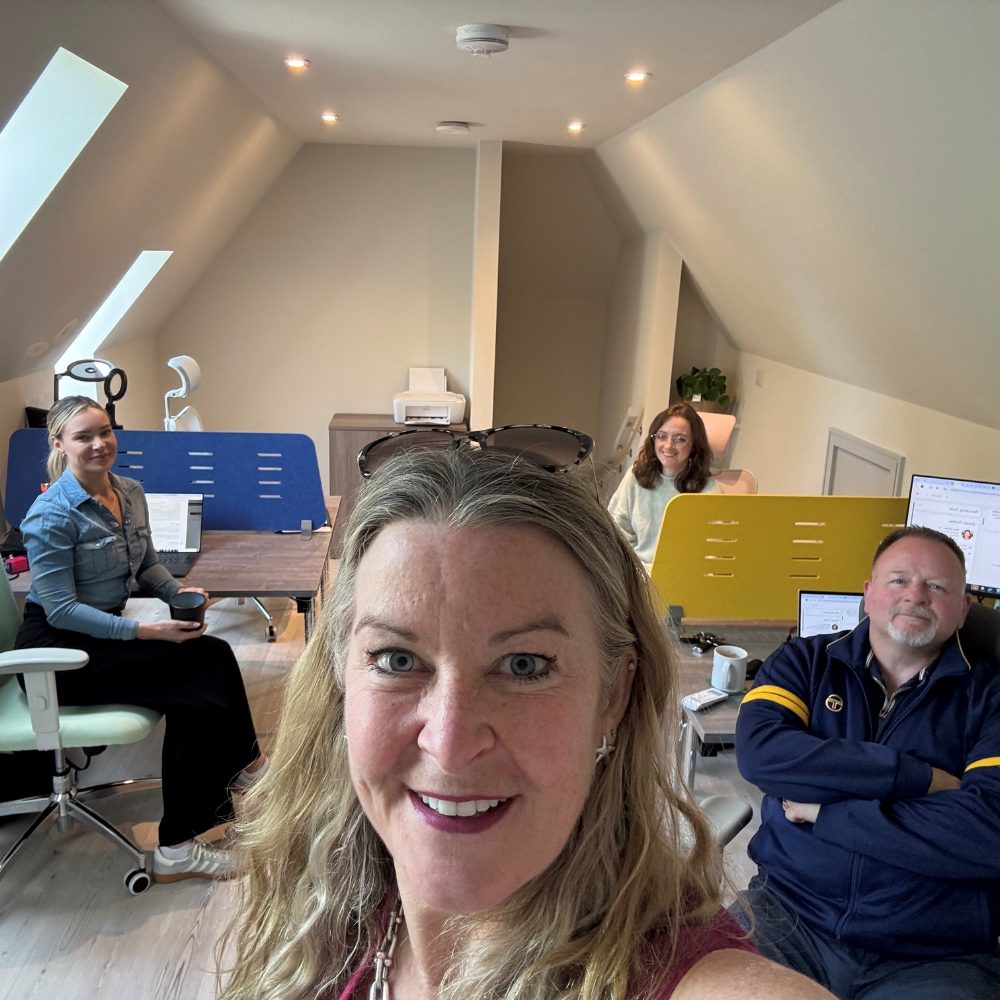
Travel has been intentionally light, but it’s still been a wonderfully full start to the year. We have started working with 6 new clients and have started 8 new roles from returning clients who have re-engaged us for new positions. And we have finally finished work on a new office space for the Cobalt team in the Oxfordshire countryside. Here’s us in our new happy space! Lookout for more pics and perhaps a video to follow on LinkedIn.
What’s made me most proud is this: 100% of our business is still referral-based, either from our clients or our candidates. Every new role we have started in 2025 so far has come from relationships that we’ve built and nurtured.
A handful of our recent senior placements include:
- VP of Sales & Business Development, Medical Devices in Illinois
- VP of Operations, Art Dealer in Utah
- Senior Program Director, Transportation in Massachusetts
- Commercial & Strategy Director, Transportation in London, UK
- VP of Operations, Financial Services in Colorado
- Chief Financial Officer, Construction in Montana
So, if you know someone who’s thinking about building their team this year, please pass on my details. I’d love to speak with them. And yes, our referral program is still running, whether you’d prefer a thank-you gift or a donation to your favourite charity.
As always, thank you for your trust, your support, and your referrals. Our business is built on relationships and it’s a privilege to work with such fantastic people every day. Here’s to more bold hires, purposeful leadership, and a year filled with momentum.
Warmly,
Helen